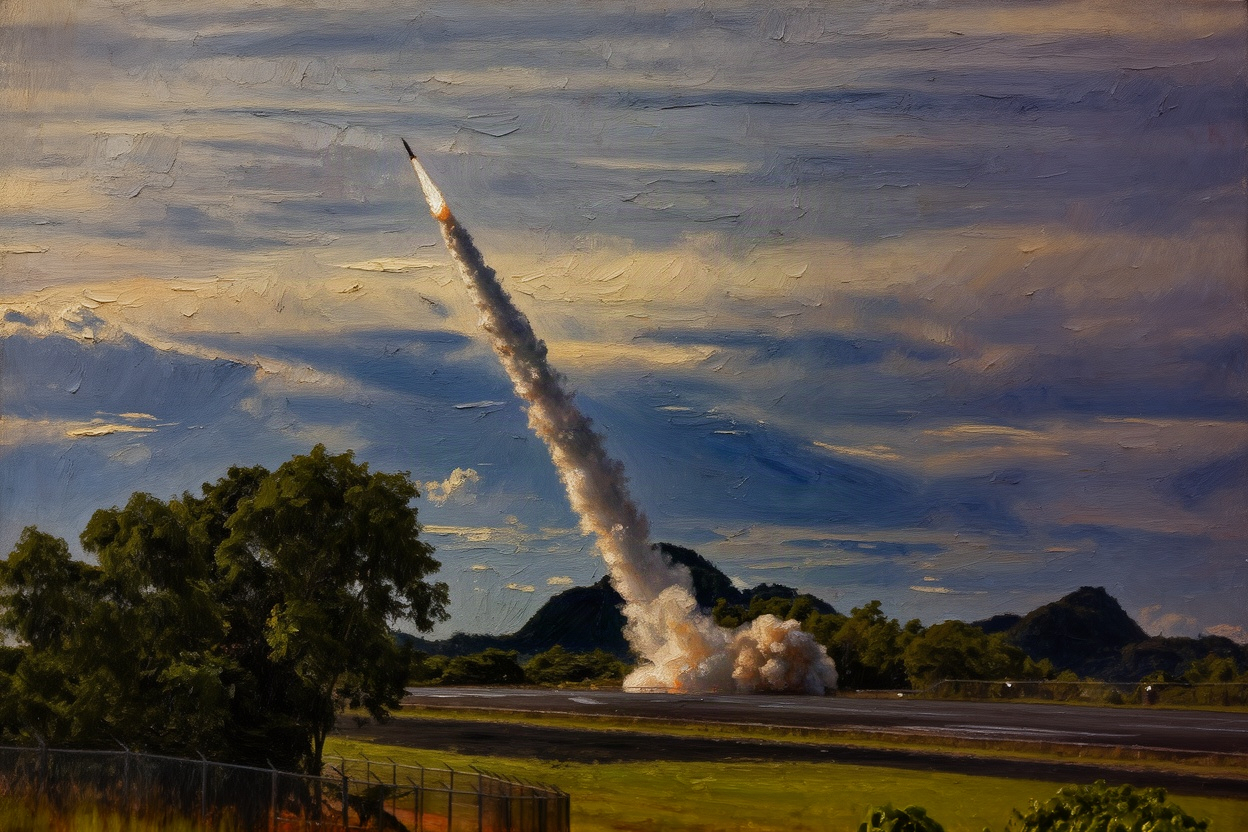
US Uses Almost All Long-Range Precision Missiles in Iran Conflict
Concerns mount over US military readiness as stockpile of precision missiles depletes in Iran war.
The United States Army has reportedly expended a significant portion of its stock of long-range precision missiles during its five-month conflict with Iran. Three unnamed sources indicated that the military's usage of these munitions raises serious concerns regarding its readiness for potential future engagements. Over the duration of this conflict, the reliance on such missiles has shown the limitations of the current arsenal.
The primary systems used in this conflict are the Army Tactical Missile Systems (ATACMS) and the Precision Strike Missiles (PrSM). It has been reported that the US has utilized nearly all of its long-range missile capabilities, according to two of the sources. This unprecedented depletion of critical long-range capabilities could hinder the military's ability to project power effectively against adversaries.
This situation highlights the strategic significance of maintaining a robust stockpile of precision weapons. The depletion signals a need for a reassessment of missile inventory management and military strategies surrounding long-range strikes. The emphasis on these systems during the conflict with Iran showcases their importance in modern warfare but also exposes vulnerabilities in reserve levels.
Operationally, the Army's Tactical and Precision Strike systems are designed to provide rapid, accurate strikes that can engage targets deep behind enemy lines. The ATACMS, for instance, boasts a range of up to 300 kilometers, allowing for effective engagement of high-value targets. However, the extensive use in Iran raises questions about replenishment capabilities and the potential delays in acquiring new stock.
Looking ahead, the depletion of these missiles could lead to reduced deterrence against other global threats. Military analysts suggest that the US must expedite the production of these systems, or risk falling behind in its strategic capabilities. An immediate assessment of prior methodologies for munitions distribution and usage might be necessary to ensure combat readiness in future conflicts.