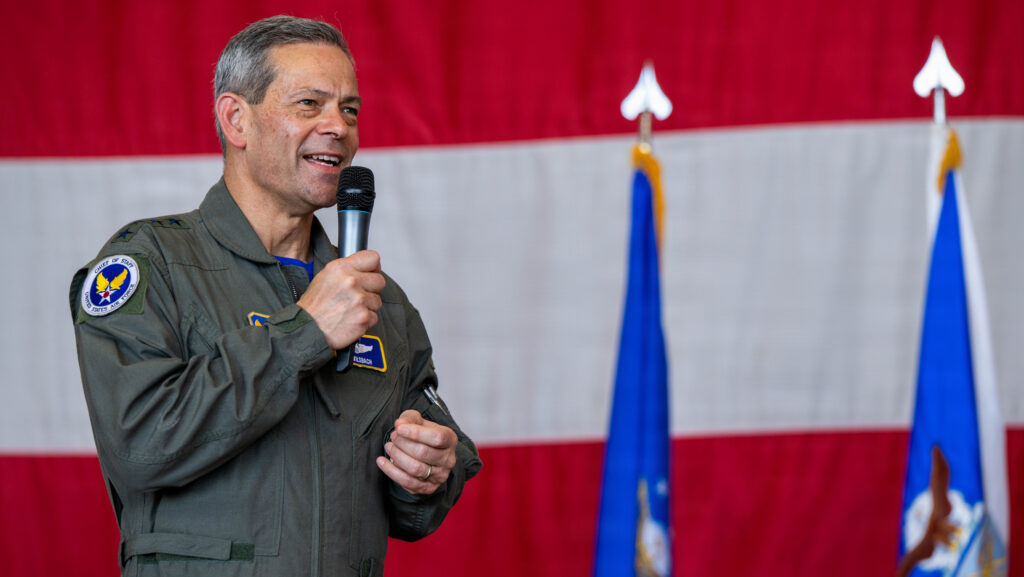
USAF Chief Warns of Strategic Challenges from Iran and F-35 Delays
Air Force Chief of Staff Gen. Kenneth Wilsbach emphasizes concerns over tactical lessons from Iran and delays in the F-35 program. The U.S. military's readiness is at stake.
General Kenneth Wilsbach, Chief of Staff of the United States Air Force, recently highlighted critical concerns regarding operational readiness and strategic challenges during a candid discussion. He pointed out the lessons learned from Iran's military actions, emphasizing the importance of adjusting U.S. tactics in response to perceived threats. This acknowledgment comes at a time when the air service faces increasing scrutiny over its modernization efforts and global commitments.
Wilsbach's insights come amid ongoing delays in the F-35 program, which has faced numerous setbacks, including issues related to software development and equipment integration. He underscored the necessity of resolving these delays swiftly to ensure the United States maintains a competitive edge in modern aerial warfare. Additionally, the General noted advancements in the T-7 Red Hawk trainer aircraft as a crucial step toward enhancing pilot training and readiness, designed to foster better preparatory environments for future operations.
The strategic significance of Wilsbach's comments cannot be overstated as they reflect broader trends in military readiness and modernization across key military powers. The ongoing situation in the Middle East, particularly tensions involving Iran, further underscores the need for the U.S. Air Force to adapt its strategies to counteract regional challenges effectively. The General's warnings serve as a call to action for military leadership to address weaknesses and bolster the service's overall posture.
In terms of operational details, the T-7 Red Hawk, equipped with modern training capabilities, represents an evolution in how the U.S. prepares its pilots for future conflicts. Meanwhile, delays in delivering F-35A Lightning II aircraft can hinder joint operations and the ability to project power effectively. The stakes are high with these developments as the U.S. seeks to ensure its air dominance and maintain a comprehensive defense strategy.
As tensions rise globally and budget appropriations for defense remain a topic of political debate, the U.S. Air Force must prioritize resolving the F-35 backlog while focusing on lessons learned from previous conflicts. The path forward hinges on implementing swift solutions to strengthen military readiness in an increasingly volatile international landscape.