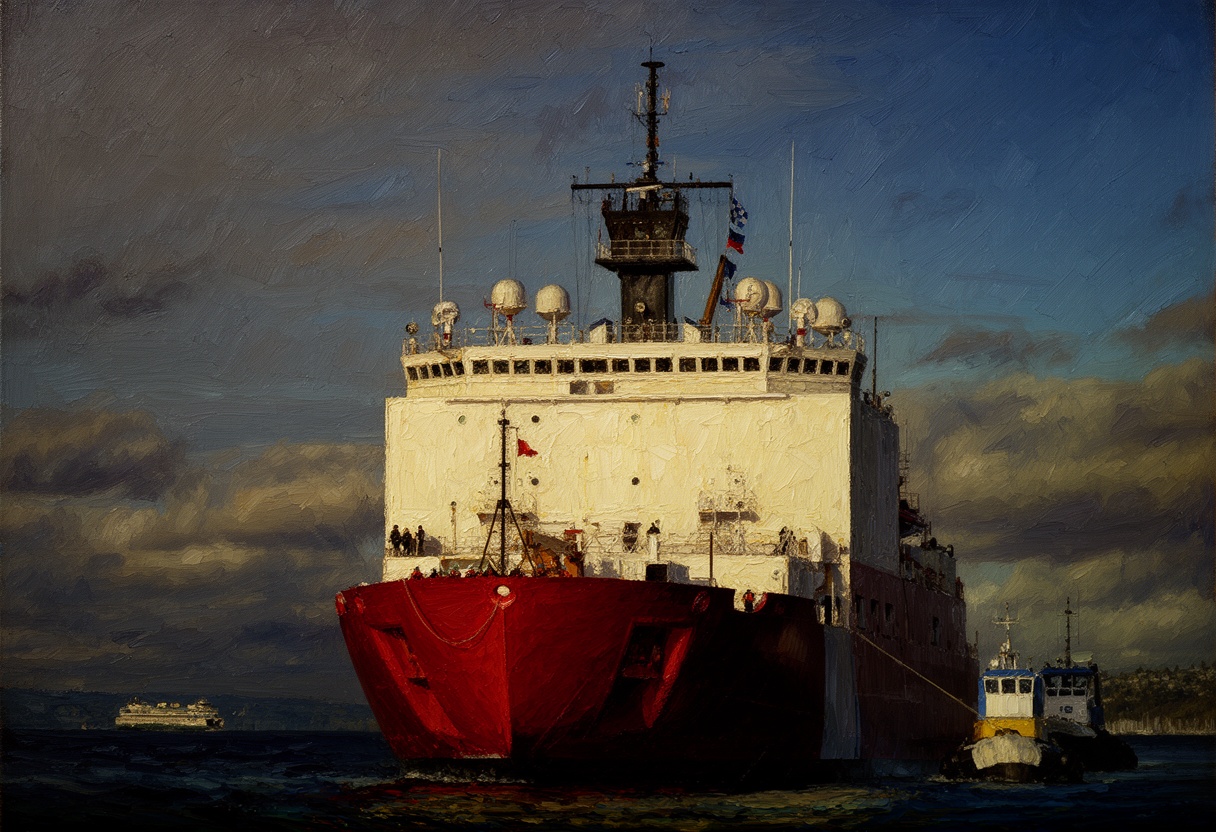
USCG Icebreaker Healy Towed to Washington for Repairs
The USCG Cutter Healy experienced a major engineering failure requiring towing to Port Angeles, Washington. This incident raises questions about the readiness of Arctic operational capabilities.
The U.S. Coast Guard's icebreaker, the Cutter Healy, was towed to Port Angeles, Washington, earlier this month following a significant engineering failure that rendered the vessel inoperable. The incident underscores potential vulnerabilities in the U.S. Arctic operational fleet, which plays a crucial role in navigating and securing maritime routes in the Arctic region.
The Cutter Healy, a vital asset for polar research and operations, has been engaged in various missions, including supporting scientific research and enhancing U.S. presence in the Arctic. The failure of its engine signals potential maintenance issues or inadequacies in the vessel's operational protocols, particularly as Arctic sea routes become increasingly vital due to climate change.
From a strategic standpoint, the readiness of icebreakers like the Healy is critical for maintaining American interests in the Arctic, especially amid growing competition from Russia and China in this strategically significant area. The U.S. Navy and Coast Guard face mounting pressure to modernize their fleets to meet the challenges posed by a more dynamic Arctic environment.
Technical specifications of the Cutter Healy reveal it is equipped with advanced navigation and communication systems, enabling effective operation in harsh environments. The need for timely maintenance and upgrades is becoming increasingly apparent as the operational tempo in the Arctic rises.
In conclusion, the towing of the Cutter Healy highlights a critical juncture for the U.S. Coast Guard's operational capabilities in the Arctic. As global interest in this region intensifies, ensuring the readiness of maritime assets will be essential to securing national interests and responding to emerging threats.