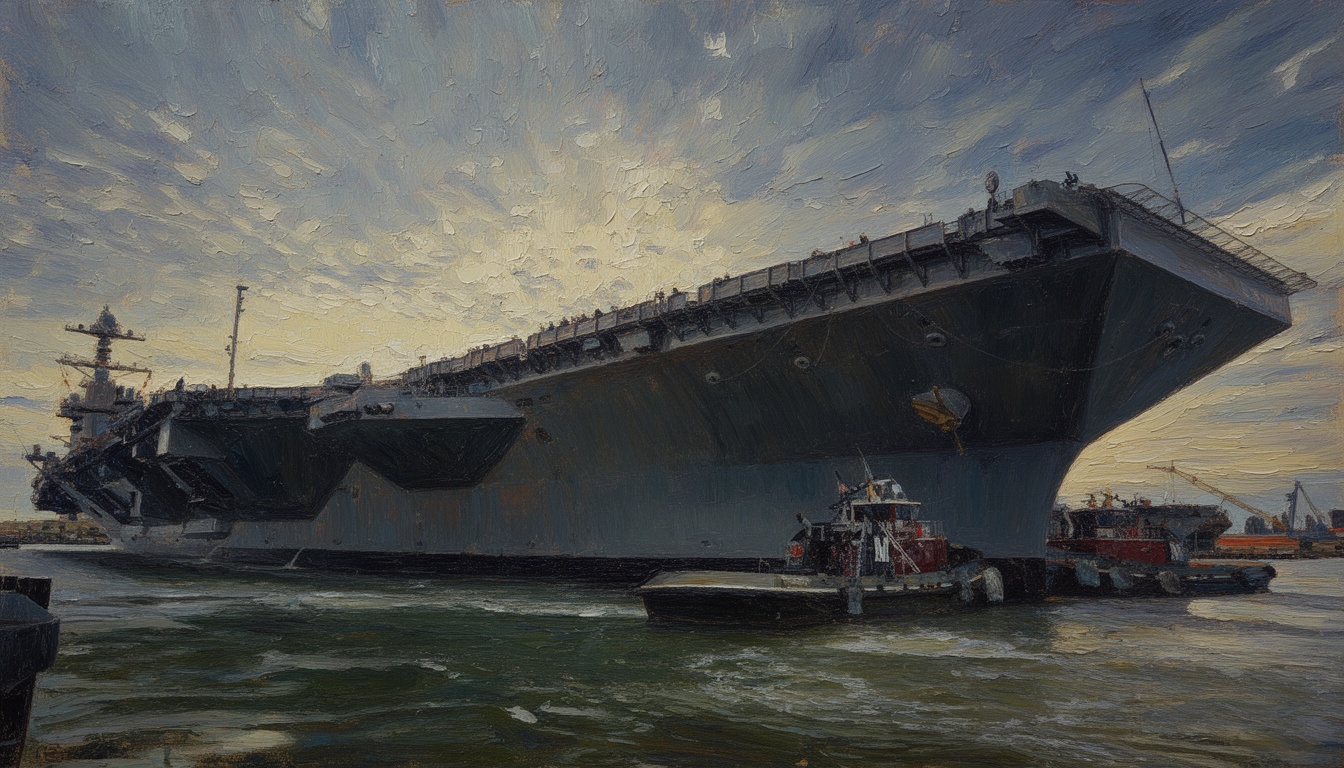
USS Gerald R. Ford to Serve as Floating Nuclear Power Source
The Pentagon seeks solutions to maintain power at vital military installations after crises. USS Gerald R. Ford will provide nuclear energy in such scenarios.
The USS Gerald R. Ford (CVN 78), the first of the Ford-class supercarriers, is set to function as a floating nuclear power plant for military facilities on land. This development stems from the Pentagon's ongoing efforts to ensure that critical military bases maintain operational power in the face of potential attacks or natural disasters. The initiative highlights a strategic move toward energy resilience for U.S. military assets.
Historically, naval vessels have been used to provide energy support during crises, particularly following natural disasters that disrupt local power grids. The USS Gerald R. Ford, equipped with two A1B nuclear reactors, can produce substantial amounts of energy, making it a suitable candidate for such operations. This capability aligns with the increasing need for military installations to remain operational regardless of external circumstances.
This strategy underscores a broader trend among modern military forces to adapt to the vulnerabilities presented by both hostile actions and natural events. Providing energy from a seaborne source like the USS Gerald R. Ford ensures that essential operations can continue without relying solely on land-based power systems, which may be compromised.
The operational details of this initiative include standardizing procedures for energy distribution from the carrier to specific installations. The Ford-class supercarrier, which is designed to support a wide range of naval operations, can also enhance the U.S. Navy's overall capabilities by providing necessary power during prolonged deployments or emergencies.
In the future, we may see an increased reliance on naval vessels not only for defense but also as critical assets for energy security. The implications of this development raise questions about the sustainability of military operations and the importance of self-sufficiency in energy production for defense purposes.