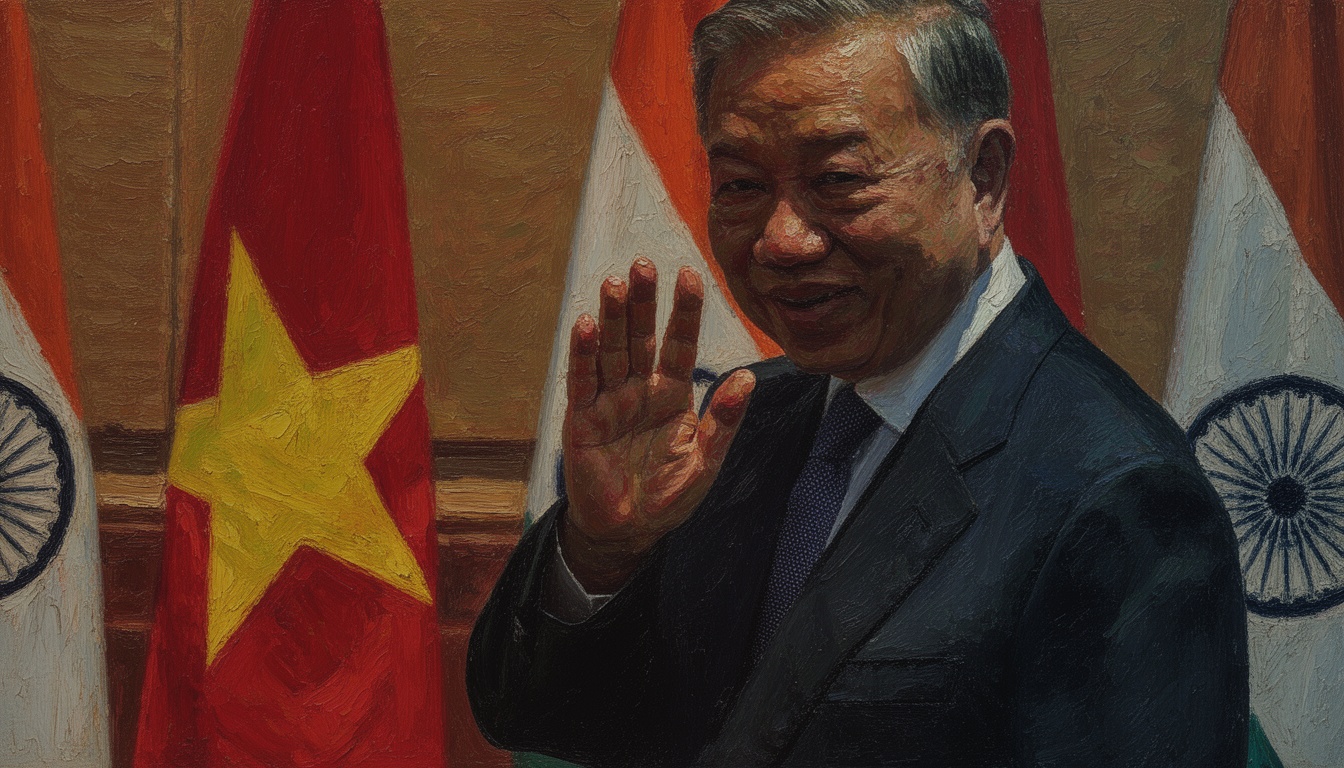
Vietnam's To Lam Launches Global Diplomacy Offensive
To Lam's active diplomacy signals Vietnam's strategic shift to engage major powers globally.
Vietnam's Minister of Public Security, To Lam, has initiated an unprecedented diplomatic campaign, engaging directly with world leaders across major capitals. Since assuming a central leadership role, he has embarked on visits to Beijing, Washington, Pyongyang, and Moscow, among others. This strategic approach marks a notable shift in Vietnam's international relations focused on expanding influence and securing economic partnerships.
Historically, Vietnam’s diplomatic efforts were characterized by caution and restraint. However, Lam's aggressive outreach indicates a departure from this norm, aligning with the nation's goal to assert itself as a key player in regional and global affairs. By actively engaging with both traditional allies and competitors, Vietnam aims to diversify its foreign relations.
The significance of Lam's travels cannot be understated. This tour not only reflects Vietnam's ambition to elevate its status on the world stage but also serves to enhance security and economic interests in a rapidly changing geopolitical landscape. Ties with major powers such as the United States and China are crucial as Vietnam navigates its position amid rising tensions in the Asia-Pacific region.
Operational details of Lam's diplomacy include a series of agreements addressing security cooperation, trade partnerships, and ASEAN collaboration. Specific aims appear to focus on increasing foreign investment and technology exchange, vital for Vietnam's economic growth. Major discussions have revolved around strengthening military ties and strategic responses to regional challenges, particularly concerning South China Sea tensions.
Looking forward, the outcomes of this diplomatic offensive will likely shape Vietnam’s future foreign policy and security dynamics. As Lam continues to cultivate these relationships, crucial developments that align with Vietnam's national interests can be anticipated, potentially influencing the broader balance of power in Southeast Asia and beyond.