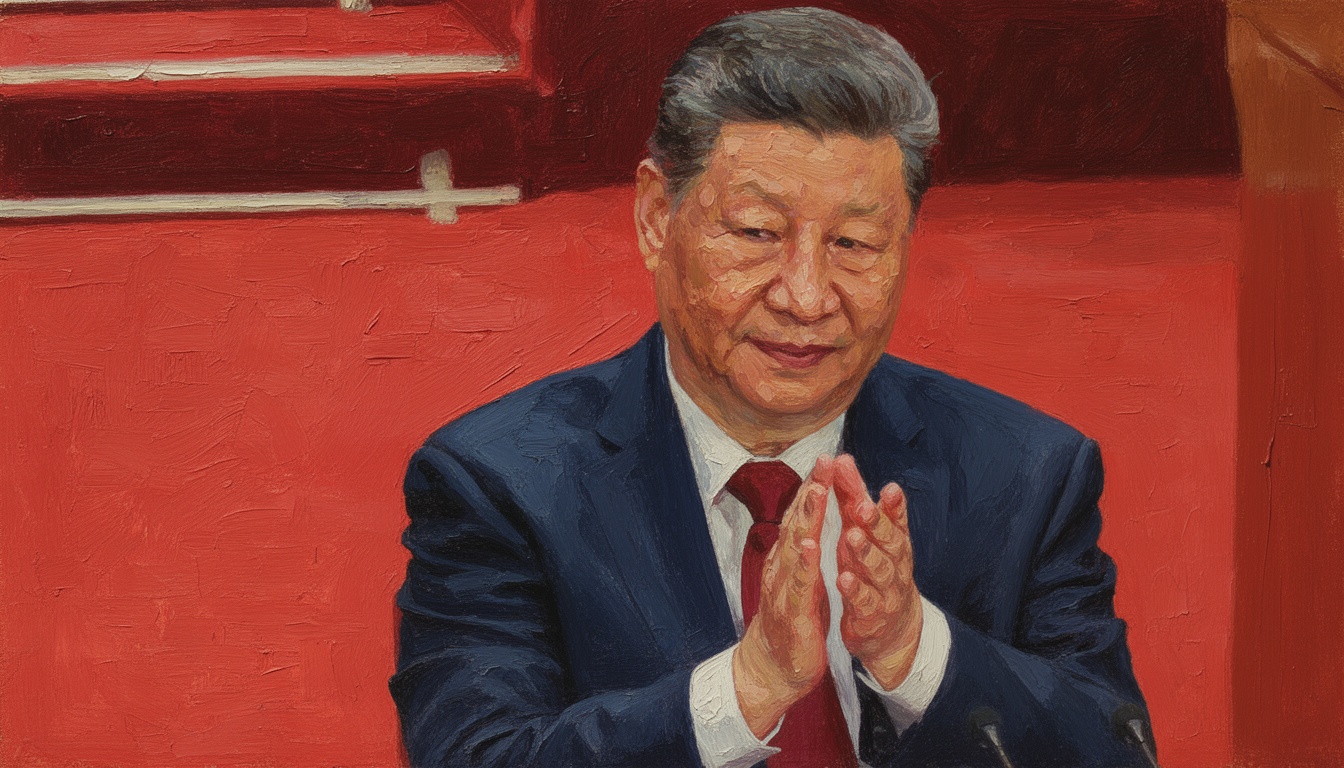
Xi Urges Global Cooperation on AI Against Single-Country Dominance
Chinese President Xi Jinping emphasizes the necessity for international cooperation in artificial intelligence. His comments reflect growing concerns over the implications of AI dominance by a single nation.
Chinese President Xi Jinping stated on Friday that artificial intelligence (AI) should not be controlled by any single country. He made this assertion during a major conference in Shanghai, advocating for enhanced international collaboration in the development and governance of AI technologies. Xi's remarks highlighted the urgency of creating a balanced approach to AI that includes diverse global participation.
This call for cooperation comes at a critical time as Chinese AI firms increasingly pose competitive challenges to their American counterparts. The rapid advancements in AI technologies have raised alarms regarding potential uses in military conflicts, cyber attacks, and even terrorist activities. Xi’s emphasis on shared governance aims to mitigate these risks by promoting a multilateral framework.
The significance of Xi's statements lies in their potential to reshape the global landscape of AI development. Given that China has ramped up its investments in military and civilian AI sectors, the focus on cooperation suggests an attempt to align with other nations to forge standards that could regulate AI's impact on security and societal issues. This international dimension underscores the importance of creating common governance mechanisms.
Technologically, advancements like AI-driven algorithms and machine learning represent both opportunities and challenges for global security. China's strides in AI capabilities, supported by substantial investments from government and private sectors, warrant attention. As of 2023, China has invested nearly $22 billion in various AI initiatives.
Looking ahead, Xi's approach could lead to substantial shifts in how nations engage with AI technologies. Should other nations respond positively, the potential for collaborative frameworks could enhance global security. Conversely, if tensions escalate around AI capabilities, the risk of an arms race in AI technologies could proliferate, raising stakes for international relations.