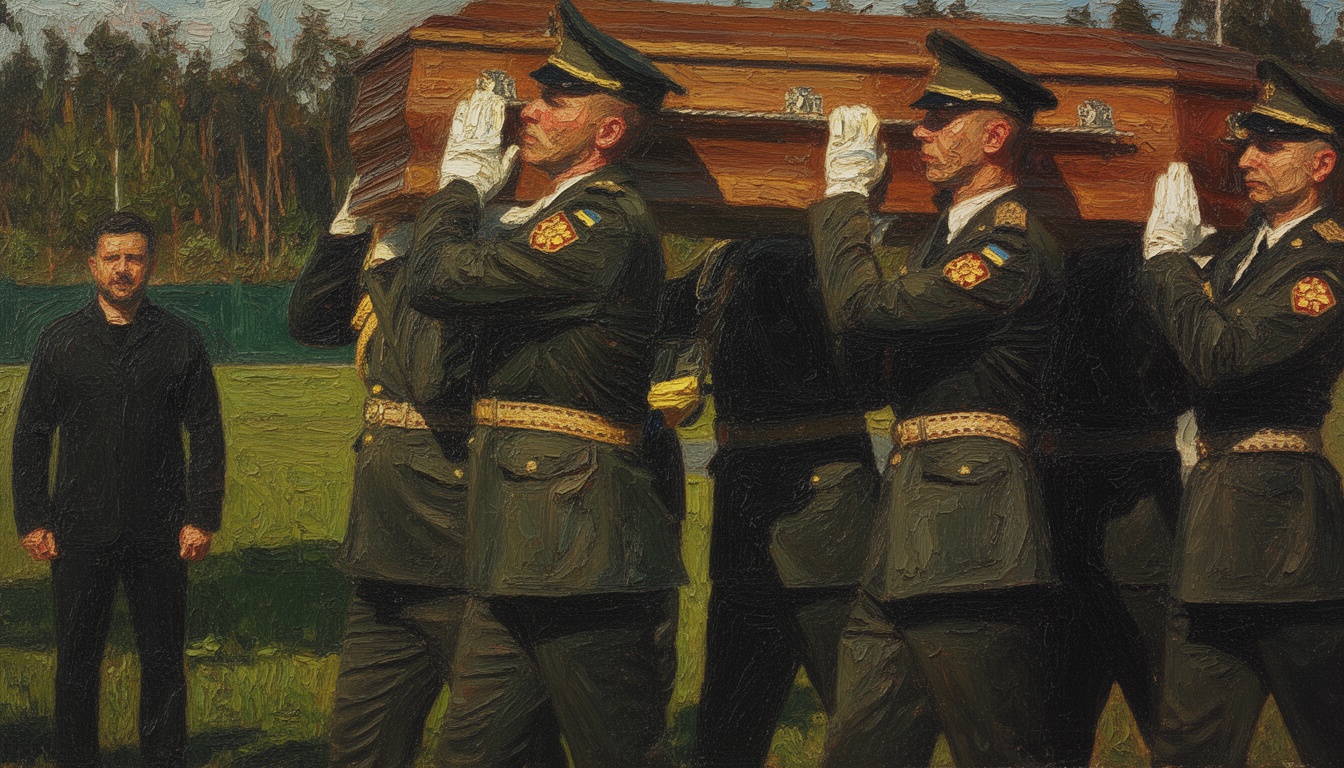
Zelensky's Military Unit Decision Raises Tensions with Poland
Ukrainian President Volodymyr Zelensky names unit after WWII militia, igniting Polish outrage. This decision complicates Ukrainian-Polish relations at a critical moment.
Ukrainian President Volodymyr Zelensky's recent decision to name a new military unit after the Ukrainian Insurgent Army (UPA), a militia notorious for its role in mass killings during World War II, has led to heightened tensions between Ukraine and Poland. The UPA is globally recognized for its involvement in atrocities against Polish citizens and Jewish communities during the war, a legacy that has been a longstanding point of contention between the two nations.
The historical context of the Ukrainian Insurgent Army has always been fraught with controversy, particularly for Poland, which suffered severe losses during the conflict. As Ukraine seeks to solidify its national identity amidst ongoing conflicts, this move is seen as a nationalist gesture that may alienate its allies, particularly Poland, which has been a significant supporter of Ukraine during recent crises.
Strategically, the decision poses risks for Ukraine's diplomatic relations with Poland at a time when unity against Russian aggression is paramount. Poland has provided substantial military and humanitarian aid to Ukraine in its fight against potential Russian incursions. However, revisiting such a sensitive historical topic may jeopardize support from Polish officials who view the UPA's legacy with apprehension.
The military unit's naming follows a broader trend in Ukraine of recognizing nationalist figures from the past, which some believe is essential for building morale. However, particular attention to a unit associated with a violent past raises questions about Ukraine's approach to history and reconciliation with its neighbors, especially considering the delicate geopolitical dynamics in Eastern Europe.
Moving forward, this decision by Zelensky may prompt a reevaluation of historical narratives within Ukraine and could strain military cooperation with Poland. Analysts suggest that Ukraine must navigate these complexities carefully to maintain its strong alliance with Warsaw while surviving direct threats from external adversaries like Russia.