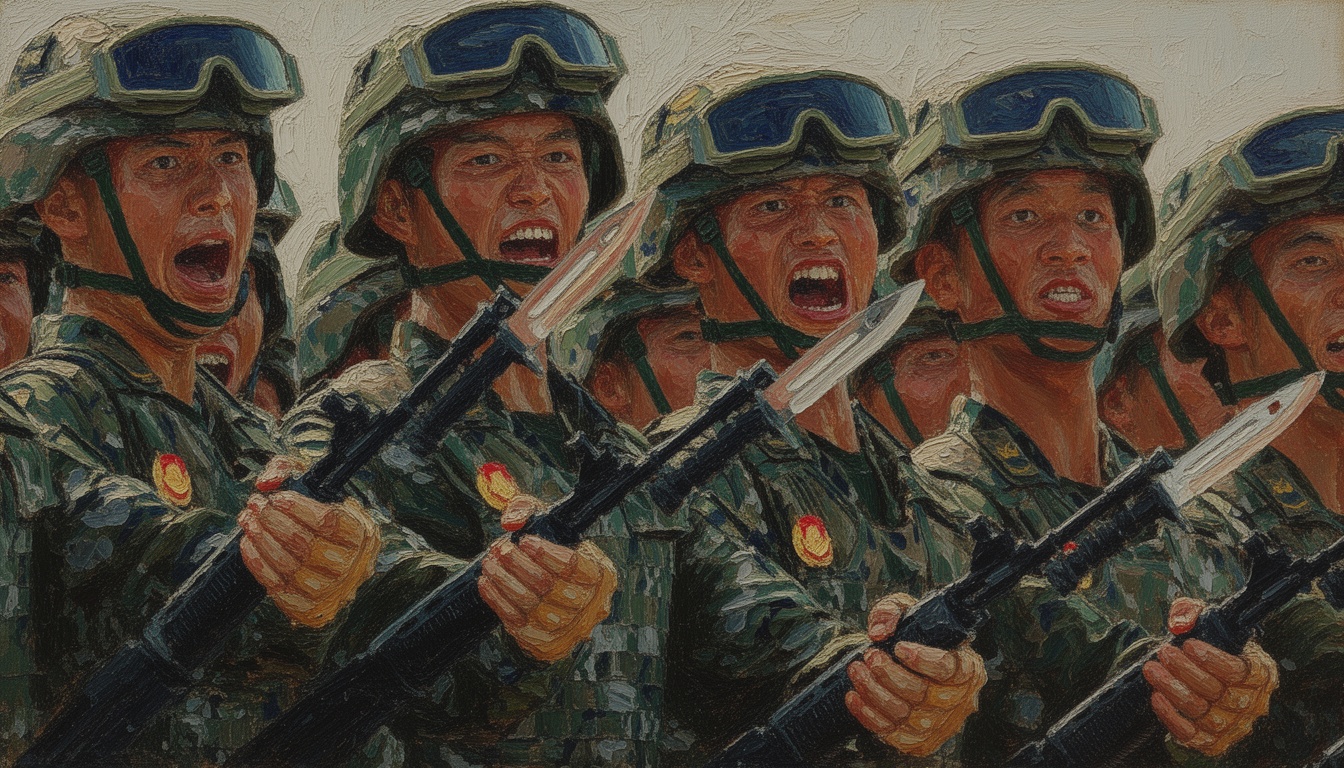
Marine Lt. Gen. Stephen Sklenka has asserted that China has achieved military parity with the United States, introducing significant challenges for U.S. military readiness in future conflicts. He emphasizes the urgent need for the U.S. to fortify its military bases in response to this rapidly evolving threat, stating that in any potential confrontation, U.S. forces may no longer hold the distinct advantage they once did.
This assessment comes in the context of escalating tensions in the Indo-Pacific region, where military developments by China—such as its advanced naval fleet, missile capabilities, and airpower enhancements—have raised alarms within U.S. defense circles. In a landscape where traditional military advantages are diminishing, U.S. strategies must adapt to address an increasingly capable adversary.
The strategic implications of this shift are profound. A militarily equal China poses a direct challenge to U.S. interests and alliances in the Indo-Pacific. Defense strategies that previously relied on overwhelming force advantage may need to be recalibrated to account for a more evenly matched adversary, impacting cooperation with regional allies and the overall security architecture in the area.
Gen. Sklenka's comments highlight a need for improved infrastructure and defensive measures at U.S. bases, considered critical in maintaining operational readiness and ensuring that American forces can respond swiftly and effectively. This development aligns with broader trends in defense investment and military modernization observed in both nations.
Looking ahead, the balance of power in the Indo-Pacific will likely tilt further as both the U.S. and China continue to enhance their military capabilities. The U.S. must reevaluate its defense posture and investment strategies to deter aggression effectively and preserve stability in a region vital to global security interests.