
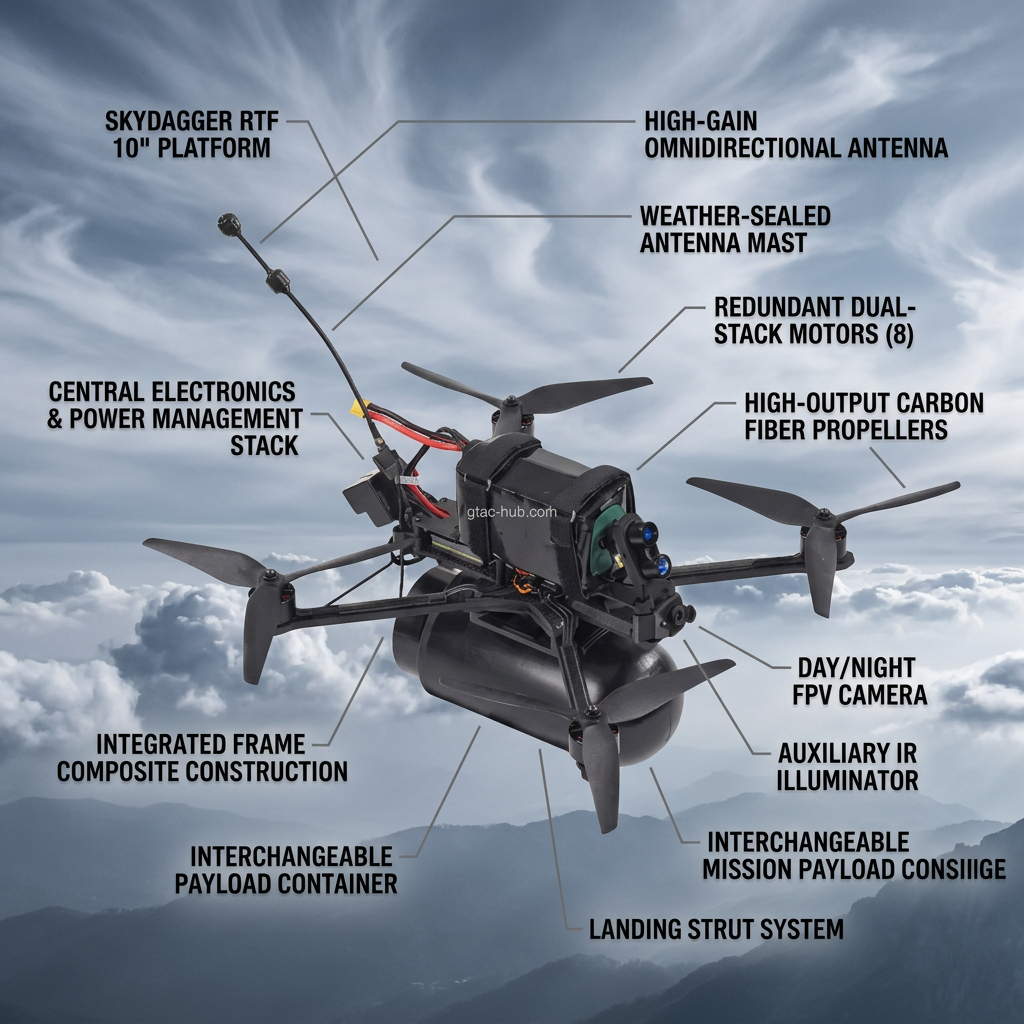
The Kuala Lumpur Defence Services Asia exhibition exposed a brisk, high-stakes scramble for drones and related capabilities in Southeast Asia. Vendors from the Middle East to Africa competed aggressively for niche segments, including lightweight aerial platforms, counter-drone systems, and payloads suited for reconnaissance and light combat roles. The overall mood suggested governments are recalibrating procurement priorities to capitalize on affordability, rapid deployment, and diversified supply chains. The front line takeaway was clear: unmanned aerial systems are no longer fringe assets but central to regional deterrence and crisis management.
Contextually, Southeast Asia has long faced a mosaic of security tensions, maritime disputes, and border incidents that elevate the salience of real-time intelligence, persistent surveillance, and rapid strike capability at relatively modest cost. The DSA exhibition reflected a shift from traditional heavy platforms toward modular UAVs that can be fielded quickly by air forces, navies, and border guard services. Governments in the region are assessing how to integrate these tools with existing air defense networks, logistics, and cyber resilience. The market’s growth also mirrors global soft power dynamics, where proxy-use of drones and dual-use tech can influence regional balance without triggering full-scale arms races.
Strategically, the event underscored a broader reorientation of defense doctrine toward scalable, low-cost, and deniable capabilities. Unmanned systems are being positioned as force multipliers in littoral environments, counterterrorism, and border control missions, where large, expensive platforms are less feasible. The interest stretches across alliances and non-aligned states alike, reflecting a shared emphasis on autonomy, information dominance, and rapid decision cycles. This dynamic could elevate regional urgency for standardized drone regulations, interoperability protocols, and secure supply lines to prevent fragmentation of capabilities.
Technical details from the expo point to a widening ecosystem of buyer-seller options: compact quadcopters and fixed-wing micro-drones, modular payloads including cameras and synthetic aperture radar, and evolving counter-drone technologies designed to neutralize threats with minimal collateral impact. Several exhibitors showcased ready-to-operate kits intended for border surveillance, disaster response, and urban reconnaissance. Budget allocations, though not uniform, emphasized total lifecycle costs, including maintenance, spares, and operator training, signaling a more mature market approach than a simple one-off purchase spree.
Looking ahead, the Southeast Asian drone market is likely to drive a mix of formal procurements, joint development programs, and private-sector collaborations that accelerate local capability build-up. Short-term consequences include faster access to adaptable ISR and light-fire support in contested spaces, along with heightened emphasis on airspace governance and export controls. In the longer term, regional defense planners may push for greater standardization and reliability benchmarks to ensure interoperability across national forces, while adversaries monitor the diffusion of low-cost drones to mirror or counter these gains.