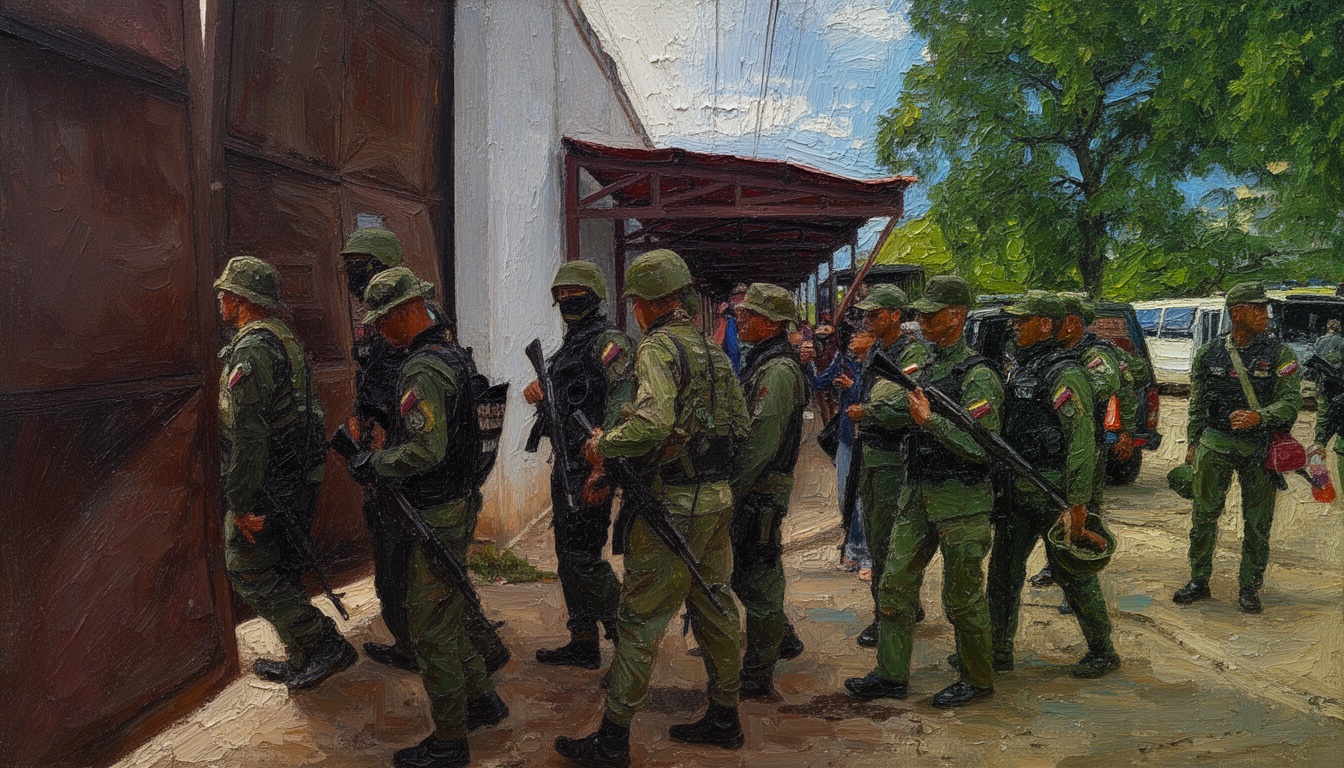

A bombing at a nightclub in northern Peru has left over 30 people injured, marking a stark escalation in the country's security crisis. The explosion, which occurred during peak hours, underscores not only the reckless tactics employed by organized crime syndicates but also the government's inadequate response to the growing threat of violence in urban areas.
The rise of organized crime in Peru has been closely tied to deep-seated issues of government corruption and institutional weakness. In recent years, analysts have reported a marked increase in criminal activities such as extortion, drug trafficking, and violent confrontations among rival gangs. This resurgence is affecting the population's daily lives and undermining public trust in government institutions, which are seen as powerless to combat the growing menace.
This incident is significant as it reveals the shifting power dynamics within Peru where criminal organizations are increasingly able to operate with impunity. With authorities focusing on anti-crime measures that prove ineffective, citizens face heightened risks in public spaces. Moreover, the intent behind such bombings appears to be a demonstration of power by criminal groups, further destabilizing local governance in regions already grappling with poverty and corruption.
Key players in this volatile environment include powerful drug trafficking organizations that are leveraging violent tactics to assert dominance and control territory. Their motivations extend beyond mere profit; they aim to undermine state authority and establish fear within the populace, thereby ensuring compliance and silence. The government's struggle to combat these groups only emboldens their actions, creating a vicious cycle of violence.
The operational details surrounding the bombing reveal a coordinated and premeditated attack, reflective of organized criminal capabilities. The explosive device, likely improvised and strategically placed, indicates a level of sophistication that poses a serious challenge to security forces. With budget constraints hampering law enforcement effectiveness and military assistance, the state is ill-equipped to manage such crises.
The bombing's consequences are likely to escalate as further violence may ensue in retaliatory confrontations between rival gangs. Public demonstrations and calls for the government to take decisive action against organized crime can be expected in the aftermath. This event also raises the specter of increased law enforcement crackdowns that may result in political ramifications and civil unrest.
Historically, Peru has faced similar crises, notably during the 1980s and 90s with the Shining Path insurgency. The inability of the state to control violence led to widespread fear and human rights abuses. Parallels can be drawn with current events, where the government’s failure may trigger a resurgence of violent protests reflecting societal discontent against both crime and ineffective governance.
In the coming weeks, it will be crucial to monitor government responses, including potential investigations into organized crime networks and legislative measures aimed at addressing the growing violence. Intelligence indicators will include patterns of escalatory violence, public sentiment toward military or police interventions, and shifts in criminal tactics or alliances as rivalries may deepen in response to this incident.