
Landing Platform Helicopter (LPH) serving as the Republic of Korea Navy's primary amphibious warfare and command ship. Displacement of 18,800 tonnes full load with a 199-metre hull. Features a full-length flight deck capable of simultaneously operating 5 helicopters (UH-60, AW159 Wildcat, or MUH-1 Marineon) with hangar capacity for 10 aircraft. The well deck accommodates 2 LCAC or LCU landing craft for over-the-beach operations. Can transport 720 fully equipped marines with their vehicles including MBTs, AAVs, and trucks. Armed with 2x RAM launchers, 1x Goalkeeper CIWS, and 2x 30mm remote weapons. Features a comprehensive command and control centre for amphibious operations. Two ships in class: Dokdo (LPH-6111) and Marado (LPH-6112). A third, larger ship has been discussed as a potential light carrier for F-35B operations.
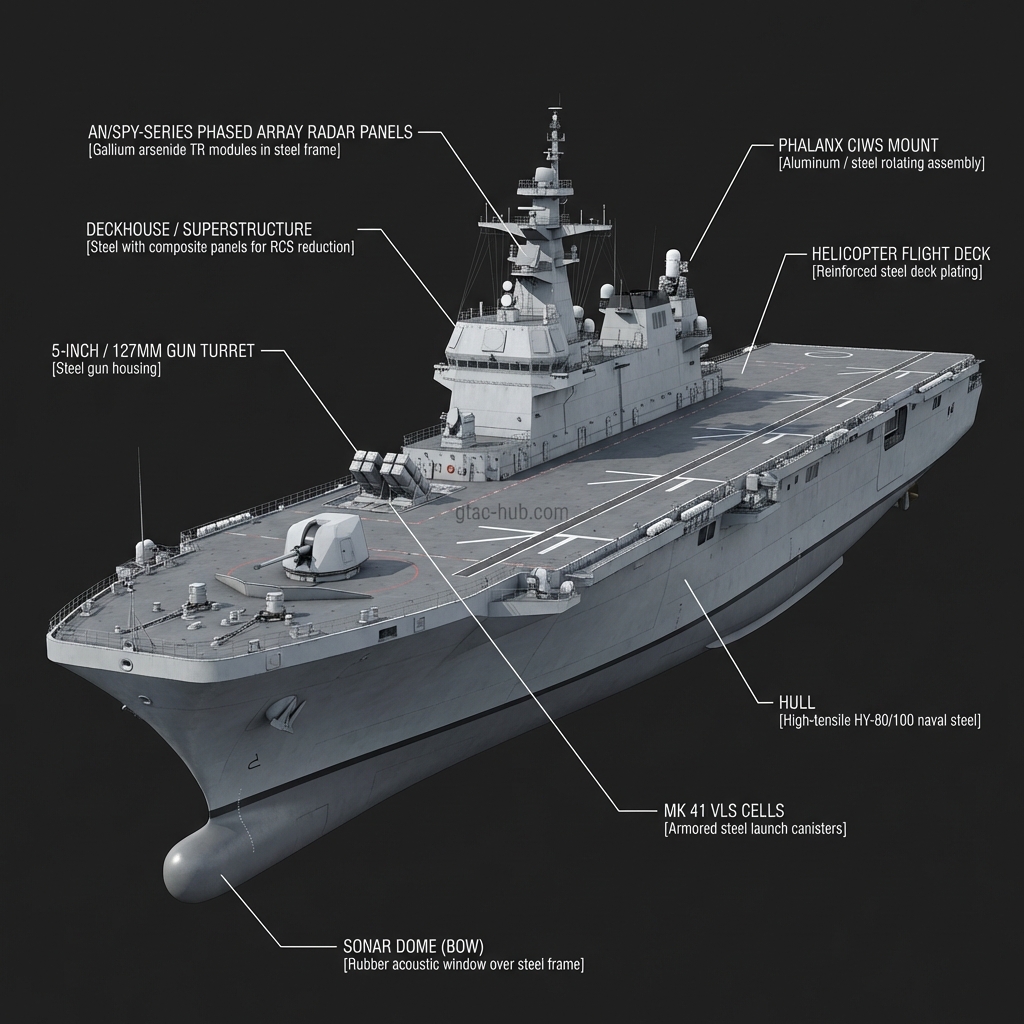
- South Korea's primary power projection platform for amphibious operations
- Operates carrier air wing for helicopter assault and VTOL/STOVL potential
- LCAC landing craft enable over-the-horizon amphibious assault
- Command and control facilities for combined arms joint operations
- Supports F-35B operations (planned STOVL variant compatibility)
- No catapult — limits fixed-wing aircraft to VTOL/STOVL types
- CIWS and RAM adequate for self-defense but relies on escort
- Limited anti-submarine capability of its own
- Single ship — no redundancy in amphibious task force
- High target value requires substantial escort resources
Sign in to join the discussion and rate this weapon system
SIGN INCounter-drone integration addresses a capability gap that became operationally critical in recent conflicts.
Weapons integration breadth gives mission planners flexibility that single-role platforms simply cannot match.
The crew ergonomics improvements here translate directly to reduced decision latency under fire.
Data link architecture here enables netcentric operations that legacy platforms in this class cannot replicate.