
نظرة عامة على النظام
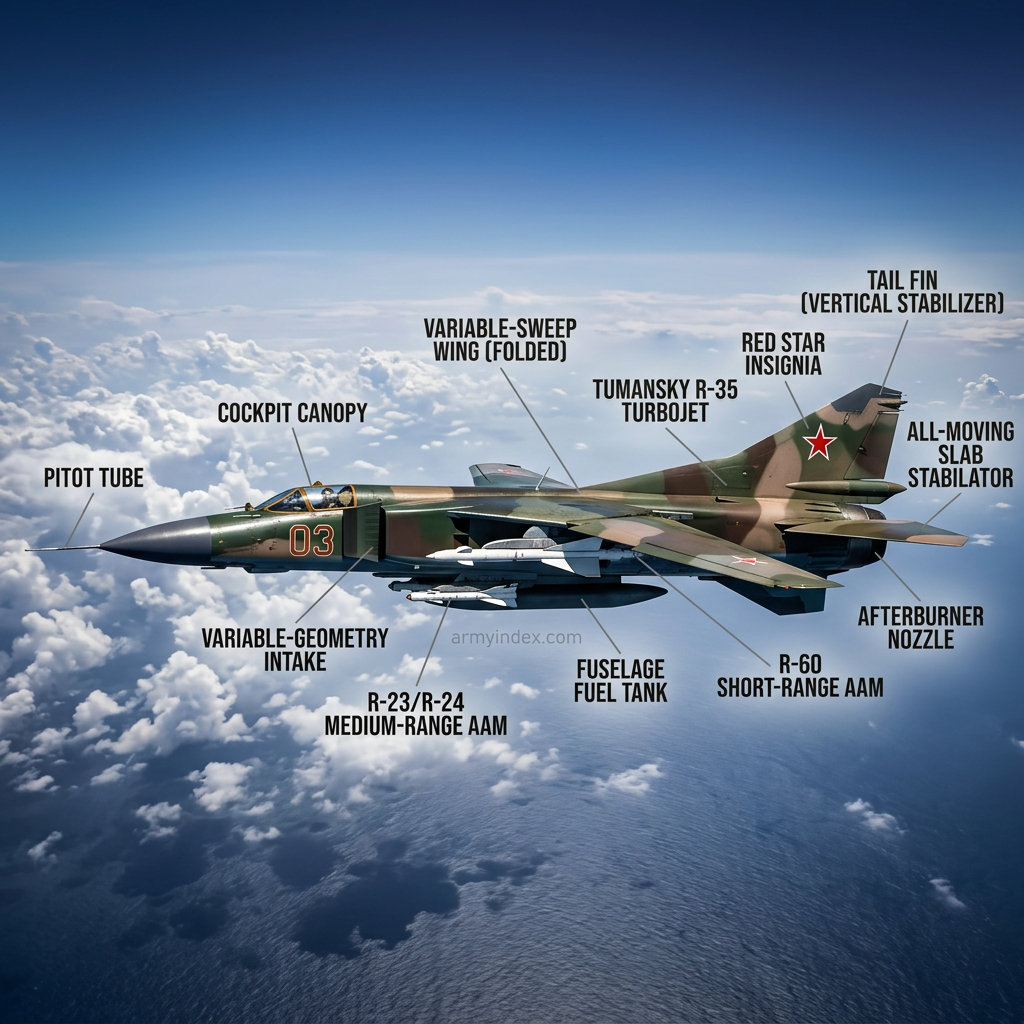
North Korea received MiG-23ML variable-geometry fighters from the Soviet Union in the mid-1980s. The variable-sweep wing allows adaptation to different speed profiles, but all avionics and radar remain completely unmodernized. With the collapse of Soviet logistical support, these aircraft suffer severe maintenance shortfalls and are largely non-operational. They represent an aging legacy capability with minimal combat utility in modern air warfare.

عرض بالحجم الكامل
MiG-23ML Flogger - Mikoyan (MiG)
المزايا
- Variable-sweep wing geometry adapts to different speed profiles
- Some Soviet-era spare parts may remain in inventory
- Large radar for era — basic BVR search capability
العيوب
- Completely obsolete avionics and radar
- Very low probability of survival in modern air combat
- Maintenance infrastructure severely degraded by sanctions
- Spare parts supply near-exhausted
المواصفات التقنية
RANGE1,950 Km
ENGINE1x Tumansky R-35-300
LENGTH16.7 M
ARMAMENT1x 23mm GSh-23L, R-23 And R-60 AAMs
MAX SPEEDMach 2.35
WINGSPAN SWEPT7.78 M
SERVICE CEILING18,500 M
WINGSPAN EXTENDED13.97 M
Discussion & Reviews(3)
Sign in to join the discussion and rate this weapon system
SIGN INNileDefenderColonel
60d ago
Main gun accuracy at extended range requires stabilization and fire control maturity that few systems achieve.
pindi_boy_99Sergeant Major
68d ago
Protection level against contemporary ATGM threats is the defining metric here, and these figures hold up well.
أنظمة مشابهة
Main gun accuracy at extended range requires stabilization and fire control maturity that few systems achieve.