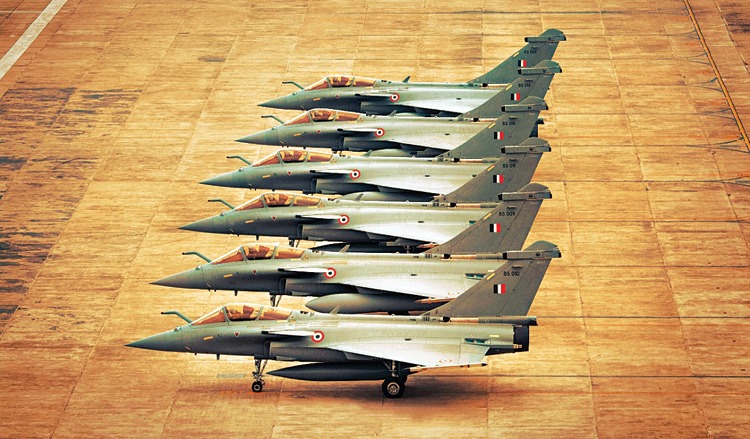
India's Defence Acquisition Council (DAC) has approved the acquisition of 114 Rafale fighter jets in a deal valued at approximately $40 billion. This represents the largest single defense procurement in India's history and marks a significant escalation in its military capabilities. The decision indicates a decisive shift toward bolstering air power amidst rising tensions in the Indo-Pacific region, particularly with China and Pakistan.
The backdrop to this moment is India's strategic competition with its neighbors, particularly China, which has been rapidly modernizing its military. The Indian Air Force has faced challenges keeping pace with the growing air capabilities of both China, which has been deploying advanced fighter jets like the Chengdu J-20, and Pakistan, which is increasingly investing in its own air force upgrades. India’s prior procurement, the purchase of 36 Rafale jets in 2016, was already framed within the context of countering Chinese assertiveness and Pakistani aggression along their shared borders.
This purchase is significant as it not only enhances India’s own air capabilities but also potentially destabilizes the regional security environment. The addition of advanced Rafale jets, equipped with state-of-the-art avionics and weaponry including Meteor air-to-air missiles, raises the stakes in aerial engagements. Furthermore, this procurement signals India's commitment to transitioning to a more assertive defense posture, which could embolden it in future military confrontations.
The motivations behind this acquisition reflect India’s pressing need to counterbalance regional adversaries. The Indian government seeks to not only empower its military but also showcase its ability to deter aggression from China and Pakistan. The Rafale's advanced capabilities are aimed at overcoming the qualitative edge that neighboring countries may possess, while also fulfilling domestic production aspirations under the 'Make in India' initiative.
Operationally, each Rafale jet can carry a payload of up to 1,500 kilograms and has a combat radius of 1,852 kilometers. The integration of advanced systems such as the FSO-IT infrared warning system enhances its effectiveness as a multi-role combat aircraft. This fleet expansion will include provisions for joint exercises with allied nations, further solidifying India’s role as a regional power.
The consequences of this strategic purchase could lead to increased military spending and an arms race in South Asia. Both Pakistan and China may feel compelled to respond by enhancing their own air capabilities, which could include further purchases of advanced jets or new missile systems. Such developments could heighten tensions further, leading to increased military confrontations along contested borders.
Historically, large-scale military procurements have often served as catalysts for conflict. The arms race of the Cold War era was predicated on similar acquisitions, where each side's fulfillment of military modernization efforts led to a cycle of escalation. New examples abound as regional powers strive to assert dominance and influence, particularly evident in the recent Indo-China standoff in Ladakh.
Moving forward, key indicators to watch include the timelines for the Rafale delivery and potential retaliatory measures from China and Pakistan. Intelligence monitoring of regional military drills and procurement announcements will provide critical insights into how this acquisition reshapes the balance of power. The next phases will likely involve new arms purchases and military doctrines shaped directly by this deal, potentially leading to a complex security landscape across South Asia.